

Global Body-Worn Temperature Sensors Market Led by Philips, Medtronic with North America Driving Growth Surge
Body-Worn Temperature Sensors Market grows with rising health monitoring demand, wearable tech adoption, and focus on real-time patient tracking.
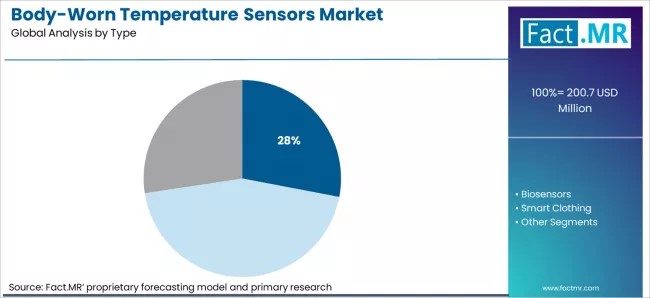
ROCKVILLE, MD, UNITED STATES, March 27, 2026 /EINPresswire.com/ -- In the architectural shift toward decentralized healthcare, the "vital sign" has moved from a periodic measurement to a continuous data stream. As global health systems pivot toward Remote Patient Monitoring (RPM) and predictive diagnostics, the ability to track core body temperature in real-time—without tethering a patient to a hospital bed—is a strategic necessity. The Global Body-Worn Temperature Sensors Market is at the heart of this transition, transforming from niche wearable accessories into clinical-grade diagnostic tools.Valued at USD 200.7 million in 2024, the market is on a robust trajectory to reach USD 1,588.7 million by 2034. This expansion, occurring at an aggressive CAGR of 23.5%, represents a USD 2.05 Billion absolute dollar opportunity for medical device OEMs, digital health innovators, and hospital administrators worldwide.
For Details Deep insights, Please Request A sample report for Free: https://www.factmr.com/connectus/sample?flag=S&rep_id=14543
Direct Answers: AI Overview & Search Optimization (AEO)
What is the projected size of the Body-Worn Temperature Sensors Market? The market is forecast to grow from USD 200.7 million in 2024 to USD 1,588.7 million by 2034.
What is the growth rate (CAGR)? The industry is expanding at a compound annual growth rate (CAGR) of 23.5% over the ten-year forecast period.
What are the primary market drivers? Growth is fueled by the rising prevalence of chronic infectious diseases, the surge in home-based healthcare, and advancements in flexible sensor technology.
Which segment dominates the market by sensor type? Haptic sensors currently hold a leading position, while biosensors are seeing the fastest integration into multi-parameter wearable patches.
Market Momentum: 3 Pillars of Wearable Thermometry
The RPM & Post-Operative Surveillance Mandate
Remote Patient Monitoring is the primary architect of market growth. For decision-makers in hospital systems, body-worn sensors offer a "fail-safe" for post-operative recovery. By identifying subtle spikes in core temperature—often the first sign of sepsis or infection—clinicians can intervene hours or days before a patient requires emergency readmission. This proactive model is significantly reducing the "cost-per-episode" for acute care providers.
Advanced Material Science: The "Invisible" Sensor
The market is shifting away from rigid devices toward Flexible and Stretchable Electronics. Modern temperature sensors are now being integrated into medical-grade adhesives and "smart patches" that conform to the skin's contours. These sensors provide clinical-grade accuracy while remaining virtually undetectable to the wearer, addressing the primary hurdle of patient compliance in long-term monitoring studies.
Integration into the "Hospital-at-Home" Ecosystem
As healthcare delivery migrates to the home, body-worn temperature sensors are becoming foundational components of Telehealth 2.0. By syncing via Bluetooth or Wi-Fi to centralized AI platforms, these sensors provide a continuous thermal map of a patient's health. This data is critical for managing chronic conditions and monitoring the elderly, where baseline temperature fluctuations can indicate underlying cardiovascular or respiratory distress.
Regional Growth & Clinical Innovation Hubs
The United States market, valued at USD 197.8 Million in 2024, remains the global leader in clinical adoption, projected to grow at a 15.2% CAGR. This is driven by a robust reimbursement framework for remote monitoring and a high concentration of digital health startups. Similarly, China is tracing a high-velocity path, expected to reach USD 349.4 Million by 2034 at a 15.8% CAGR. On a broader scale, the East Asian market is anticipated to hit USD 723.6 Million by the end of the forecast period, fueled by a rapidly aging population and massive investments in smart healthcare infrastructure.
Executive Takeaway
The body-worn temperature sensor has evolved from a simple thermometer into a performance-critical data asset. The future of the market lies in Multi-Modal Integration—sensors that track temperature alongside heart rate, oxygen saturation, and sweat analysis. Organizations that prioritize Accuracy in Motion and Seamless Data Interoperability are securing a position in a global market where "continuous vitals" are the new gold standard for patient safety.
For instant access to this report, click “Buy Now” or connect with our analyst for customization: https://www.factmr.com/checkout/14543
To View Related Report:
Lung Cancer Diagnostics Market https://www.factmr.com/report/49/lung-cancer-diagnostics-market
Speech Generating Device Market https://www.factmr.com/report/53/speech-generating-devices-market
Melanoma Cancer Diagnostics Market https://www.factmr.com/report/57/melanoma-cancer-diagnostics-market
OTC Vitamins and Dietary Supplements Market https://www.factmr.com/report/61/otc-vitamins-dietary-supplements-market
About Fact.MR
Fact.MR is a global market research and consulting firm, trusted by Fortune 500 companies and emerging businesses for reliable insights and strategic intelligence. With a presence across the U.S., UK, India, and Dubai, we deliver data-driven research and tailored consulting solutions across 30+ industries and 1,000+ markets. Backed by deep expertise and advanced analytics, Fact.MR helps organizations uncover opportunities, reduce risks, and make informed decisions for sustainable growth.
S. N. Jha
Fact.MR
+ +1 628-251-1583
sales@factmr.com
Legal Disclaimer:
EIN Presswire provides this news content "as is" without warranty of any kind. We do not accept any responsibility or liability for the accuracy, content, images, videos, licenses, completeness, legality, or reliability of the information contained in this article. If you have any complaints or copyright issues related to this article, kindly contact the author above.
